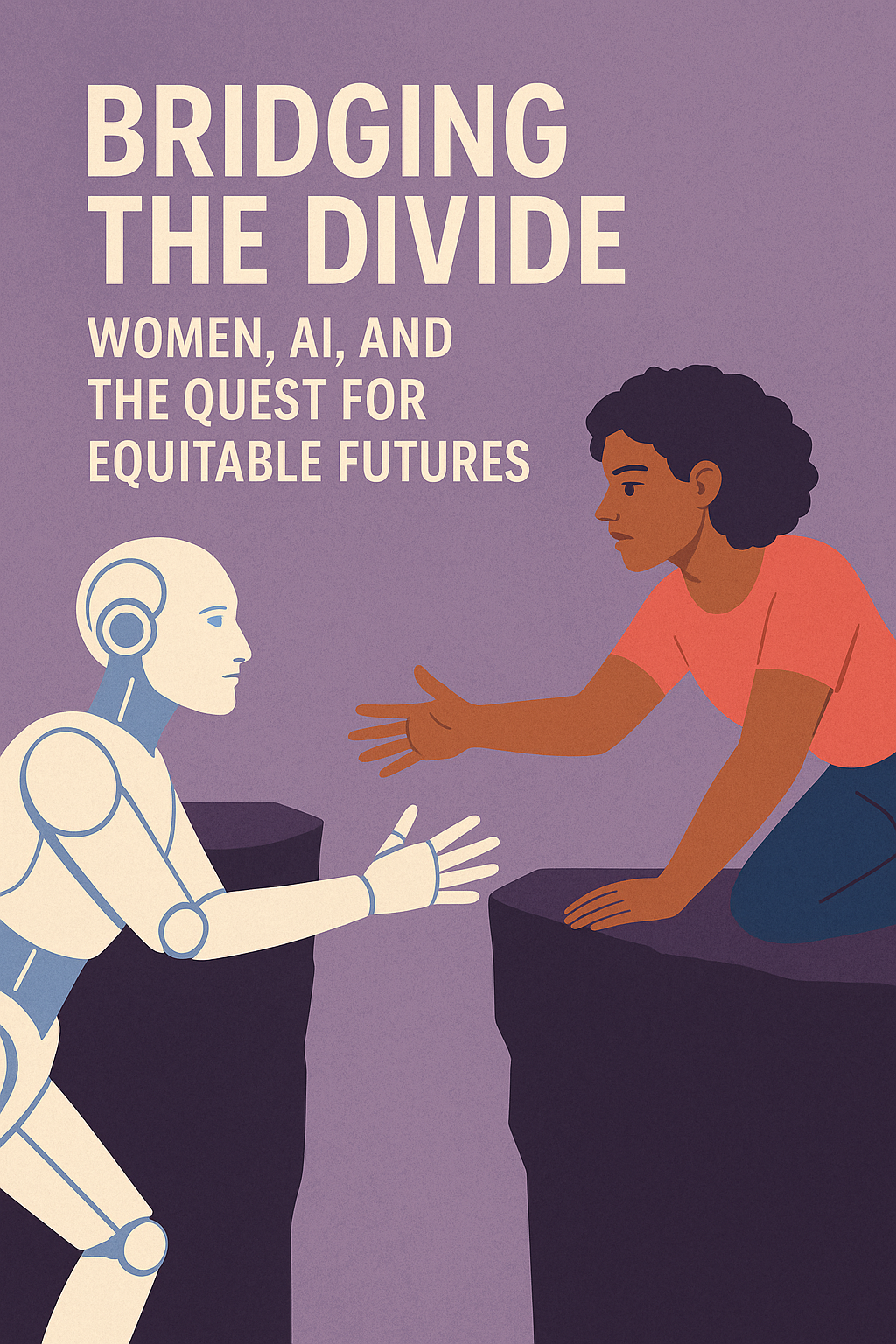
Bridging the Divide: Women, AI, and the Quest for Equitable Futures
Part of the AI in Africa Comprehensive Guide | This article is part of our extensive resource on AI transformation across Africa. Explore how gender equity, feminist perspectives, and inclusive design are shaping ethical AI development.
Introduction: The Critical Intersection of AI and Gender
Artificial Intelligence is rapidly transforming every aspect of modern society, from healthcare and finance to education and transportation. Yet this technological revolution is not gender-neutral. The intersection of AI and gender represents a critical nexus characterized by a stark duality: AI holds immense potential to advance gender equality and empower women, but if developed without careful consideration of gender dynamics, it risks perpetuating and amplifying existing inequalities.
The urgency of addressing this intersection cannot be overstated. As AI systems increasingly make decisions that affect women's access to jobs, credit, healthcare, and opportunities, we must ensure these technologies serve as catalysts for equality rather than barriers to progress.
The Stark Reality: Women's Underrepresentation in AI
Global Statistics Tell a Troubling Story
The AI field exhibits profound gender imbalances across all levels:
| Category | Metric | Percentage |
|----------|--------|------------|
| Research & Academia | AI research positions held by women | 12% |
| Research & Academia | Authors at major AI conferences | 18% |
| Research & Academia | AI faculty positions worldwide | 16% |
| Research & Academia | Gender gap in CS faculty hires (North America) | 22% |
| Industry Workforce | Women in AI industry workforce | 22-30% |
| Industry Workforce | Gender gap in software development | 44% |
| Industry Workforce | Women in C-Suite positions at AI startups | 18% |
| Industry Workforce | Regional variation range | 14-28% |
The Leaky Pipeline Effect:
The underrepresentation follows a "leaky pipeline" pattern where women's participation diminishes significantly at higher seniority levels. While women may enter the field, systemic barriers hinder their retention and advancement, resulting in a severe leadership deficit.
Data Challenges and Inconsistencies
A fundamental challenge is the severe lack of consistent, standardized, and gender-disaggregated data specifically for the AI field. This data deficit makes it difficult to:
- Accurately measure the scope of the problem
- Track meaningful progress over time
- Design effective interventions
- Hold organizations accountable for diversity goals
Algorithmic Bias: The Hidden Gender Divide in AI Systems
Beyond representation issues, AI systems themselves often perpetuate gender bias through discriminatory algorithms and biased datasets.
Sources of Gender Bias in AI
Data Bias:
- Historical Inequity: Training data reflects past societal discrimination
- Unrepresentative Datasets: Lack of diversity, underrepresenting women or specific subgroups
- Biased Labeling: Human-assigned labels that reflect stereotypes or oversimplified categories
Algorithmic and Model Bias:
- Problem Formulation: How objectives are defined can inherently lead to biased outcomes
- Feature Selection: Choosing inputs that act as proxies for gender
- Model Architecture: Design choices reflecting unconscious biases of predominantly male development teams
Evaluation and Human Bias:
- Inappropriate Benchmarks: Using evaluation metrics that don't capture fairness across groups
- Developer Bias: Homogenous backgrounds leading to blind spots
- Societal Stereotypes: Pervasive gender stereotypes learned from training data
Real-World Manifestations of Gender Bias
Employment and Recruitment:
- AI resume screening tools penalizing keywords associated with women's colleges
- Job advertising platforms showing high-paying STEM ads predominantly to men
- Hiring algorithms discriminating against women and minority candidates
Facial and Voice Recognition:
- 35% misclassification rate for darker-skinned women vs 0.8% for lighter-skinned males
- Voice recognition systems 70% more likely to accurately recognize male voices
- Overwhelming use of female voices for digital assistants reinforcing stereotypes
Healthcare:
- AI models trained predominantly on male datasets leading to diagnostic errors for women
- Symptoms presenting differently in women not adequately captured
- Performance issues in breast cancer screening compared to human radiologists
Financial Services:
- Credit scoring algorithms perpetuating historical bias
- Denial of loans and financial opportunities based on biased data or proxy variables
Content Generation:
- Large Language Models associating female names with domestic roles and male names with careers
- Image generation models producing heavily stereotyped occupational outputs
- Underrepresenting women even in roles where they have significant real-world presence
Barriers and Challenges: Why Women Leave the AI Field
Educational and Early-Career Hurdles
The journey often begins with educational barriers where gender stereotypes influence subject choices from an early age. A 2022 survey revealed alarming rates of harassment among students:
- 86% experienced gender-based harassment
- 65% faced racial harassment
- 50% encountered sexual harassment
Toxic Workplace Cultures
Once in the workforce, women face significant challenges:
- 72% of women in tech have experienced exclusion, bias, or harassment
- 50% of women technologists report racial harassment
- Pervasive "bro culture" in many tech environments
- These toxic environments are major drivers of attrition
Economic and Career Inequalities
Pay Gap:
- Women in tech earn only 80-84 cents for every dollar earned by male counterparts
- The gap widens further for women of color
- This aligns with the broader global gender wage gap of approximately 20%
Leadership Gap:
- Women hold only 28% of leadership roles in tech
- 67% of mid-career women aspire to senior roles but face slower progression
- Limited access to influential sponsors needed for advancement
Funding Disparities:
- Startups founded solely by women receive only 2.3% of venture capital funding
- All-female teams remain significantly underfunded compared to all-male teams
- The AI investment boom is exacerbating this inequality
The Attrition Crisis
Perhaps most alarming, half of women leave the tech industry by age 35 - a rate 45% higher than their male counterparts. This mid-career exodus represents a massive loss of talent and experience, driven by:
- Compounded challenges including lack of resources and mentors
- Gender stereotyping and toxic work environments
- Insufficient flexibility and support for caregiving responsibilities
- Limited access to sponsorship for career advancement
AI's Differential Impact on Women's Lives
Employment and Economic Implications
AI's automation capabilities raise concerns about job displacement, with impacts unlikely to be gender-neutral:
Risks:
- Women's concentration in administrative and clerical roles makes them vulnerable to automation
- Overrepresentation in informal and vulnerable employment compounds risks
- Potential for AI to increase wage inequality, widening the existing gender pay gap
Opportunities:
- AI-driven financial inclusion tools offering alternative credit scoring
- Personalized financial coaching for women entrepreneurs
- Business automation tools potentially leveling the playing field for small businesses
The Digital Gender Divide
The rise of AI necessitates new digital skills, posing risks of widening existing divides:
- Women are already 25% less likely than men to leverage digital technology effectively
- Unequal access to AI skills training could leave many women behind in the future labor market
- Without equitable access, AI benefits may only reach digitally privileged women
Impact on Unpaid Care Work
A critical but often overlooked dimension is AI's interaction with unpaid care work:
- Women globally spend over five times more hours on domestic and care responsibilities
- AI automation primarily targets paid work while care burden remains unchanged
- Risk of increasing women's relative time poverty if unpaid work isn't addressed
- Need for AI development to recognize, reduce, and redistribute care work
Trust and User Experience Gaps
Women's experiences with AI technologies often differ significantly from men's:
- Women tend to be more skeptical and concerned about AI applications
- Higher concerns about safety, particularly regarding autonomous vehicles
- Greater emphasis on the importance of inclusive design processes
- Lower levels of excitement about AI's increasing role in daily life
Celebrating Women's Contributions to AI
Despite systemic barriers, women have made foundational contributions to AI from its earliest origins to current ethical leadership.
Historical Pioneers
Ada Lovelace: Widely regarded as the world's first computer programmer, she envisioned computing devices beyond mere calculation, predicting their creative applications.
Grace Hopper: Developed the first compiler, revolutionizing software development, and championed machine-independent programming languages while advocating tirelessly for women in STEM.
Contemporary Leaders and Innovators
Core AI Research:
- Fei-Fei Li: Co-led creation of ImageNet, advancing computer vision capabilities
- Cynthia Dwork: Pioneer in differential privacy and fairness in AI
- Regina Barzilay: MacArthur Fellow applying NLP and ML to healthcare challenges
- Daphne Koller: Expert in probabilistic models and co-founder of Coursera
AI Ethics and Social Impact:
Remarkably, many prominent women leaders focus specifically on AI ethics and societal dimensions:
- Timnit Gebru: Renowned for exposing bias in facial recognition and large language models
- Joy Buolamwini: Founded the Algorithmic Justice League, uncovered bias in facial recognition
- Kate Crawford: Leading researcher analyzing power structures embedded in AI systems
- Alondra Nelson: Former White House Office of Science and Technology Policy head
Industry Leadership:
- Mira Murati: Leadership roles at OpenAI with commitment to responsible AI
- Pelonomi Moiloa: CEO of Lelapa AI, building solutions for African contexts
- Kate Kallot: Founder of Amini, using AI for environmental monitoring in Africa
Pathways Forward: AI as a Tool for Gender Equality
Strategic Applications for Empowerment
Healthcare: AI can improve diagnosis and treatment of conditions affecting women, overcome historical medical research biases, and support personalized medicine approaches.
Education: Personalized learning platforms offer flexible opportunities, potentially bridging access gaps for girls and women while delivering STEM education in bias-mitigated ways.
Economic Opportunity: Carefully designed AI can mitigate human bias in hiring, provide affordable business support for women entrepreneurs, and enhance financial inclusion through alternative credit scoring.
Safety and Security: AI tools for enhancing women's safety, combating online harassment, and developing real-time monitoring systems for gender-based violence.
Policy and Governance Imperatives
Moving forward requires robust policy measures:
Data and Transparency:
- Mandate collection and reporting of standardized, gender-disaggregated data
- Require transparency in AI system design and decision-making processes
- Develop clear accountability mechanisms for biased outcomes
Inclusive Development:
- Ensure meaningful participation of diverse women in AI governance
- Invest in digital literacy and equitable technology access programs
- Support women-led AI initiatives through targeted funding
Regulatory Framework:
- Develop and enforce legislation addressing AI-driven bias and discrimination
- Create mechanisms for remedy and reparation for discriminatory outcomes
- Integrate gender perspectives into national AI strategies
The Intersectional Imperative
Understanding AI's impact requires recognizing that "women" are not a monolithic group. Intersectional analysis reveals how biases compound at the intersections of multiple identities:
Race and Gender: Facial recognition exhibits significantly higher error rates for darker-skinned women, while language models assign stereotypical roles varying by both gender and perceived race.
LGBTQ+ Status: AI systems relying on binary gender concepts inherently harm transgender and non-binary individuals through misgendering, dataset erasure, and outing risks.
Geography and Socioeconomic Status: Women in the Global South and from lower socioeconomic backgrounds face distinct disadvantages due to geographical biases and digital divides.
The Complexity Challenge
Addressing intersectionality in AI presents significant challenges:
- Data Scarcity: Limited data for specific intersectional subgroups
- Modeling Complexity: Difficulty handling multiple, interacting demographic attributes
- Metric Limitations: Standard fairness metrics may downweigh smaller intersectional groups
Recommendations for Action
For Academia
- Promote interdisciplinary research bridging computer science and gender studies
- Integrate AI ethics and bias analysis into curricula
- Actively recruit and support women and marginalized students in AI fields
- Develop standardized methods for gender-disaggregated data collection
For Industry
- Commit to measurable diversity goals across hiring, retention, and leadership
- Implement rigorous bias detection and mitigation throughout AI product lifecycle
- Invest in comprehensive ethical AI training for all employees
- Establish formal mentorship and crucial sponsorship programs for women
- Foster inclusive workplace cultures that combat harassment and bias
For Policymakers
- Mandate public reporting of gender-disaggregated AI sector data
- Develop clear regulations preventing algorithmic bias and discrimination
- Invest in digital literacy programs for women and girls
- Provide targeted support for women AI entrepreneurs
- Ensure diverse representation in national AI strategy development
For Civil Society
- Raise awareness about gendered dimensions of AI
- Advocate for robust policies and industry accountability
- Provide platforms for community building and networking
- Facilitate constructive multi-stakeholder dialogues
Conclusion: A Call for Intentional Action
The evidence is clear: achieving gender equality in the age of AI will not be an automatic outcome of technological progress. It demands conscious, deliberate, and sustained effort from all stakeholders.
We must move beyond the prevailing techno-economic focus that prioritizes performance benchmarks and market growth toward a more holistic, human-centered model where equity is not an optional add-on but a core design principle integrated from the outset.
The path forward requires:
- Dismantling systemic barriers within education and workplaces
- Proactively identifying and mitigating algorithmic bias throughout the AI lifecycle
- Ensuring equitable access to AI technologies and skills
- Guaranteeing fair distribution of AI's benefits
- Centering the voices and leadership of diverse women in AI development and governance
By embracing these imperatives and committing to a future where AI development is guided by principles of equity and inclusion, we can bridge the existing divides and harness AI's transformative potential for the benefit of all members of society.
The choice is ours to make, and the time for action is now. The future of AI—and its impact on gender equality—depends on the decisions we make today.
At DigiTransact AI, we're committed to developing inclusive AI solutions that embody equity principles and serve diverse communities. Our approach prioritizes ethical AI development, diverse representation in AI design, and culturally-sensitive solutions that address gender bias and promote inclusive technology access. Contact us to discuss how we can help your organization build AI systems that serve all members of society equitably.
.png)